Top 7: Best Client Testimonial Management Tool in 2026
Compare the 7 best client testimonial management tools for 2026 — collection, video, moderation, and display features to help you choose the right fit.
In this article
Beyond Quotes: Turning Customer Voice into a Growth Engine
Your best testimonials are probably already winning deals, just not on your website. They are buried in inboxes, scattered across Google reviews, stuck in Slack threads, or sitting in unedited customer videos no one has published. In 2026, that kind of chaos does more than create clutter. It costs trust, slows conversions, and leaves strong social proof unused.
The fix is not collecting more feedback at random. It is building a system that captures customer voice with low friction, organizes it quickly, and publishes it where buyers actually decide. That matters because in 2026, 92% of consumers hesitate to purchase without reviews, and products with five reviews see a 270% higher purchase likelihood.
The best testimonial tools now do far more than store a few nice quotes. They help teams capture authentic video, pull in reviews from multiple channels, and turn raw customer feedback into assets that move revenue, from a live Wall of Love to pricing-page proof and sales enablement content.
If you're choosing the best client testimonial management tool in 2026, do not just compare feature lists. Match the platform to the job. Video-first SaaS proof, local service reputation, e-commerce UGC, and a centralized review library each demand a different kind of strength.
1. ZenX Testimonials
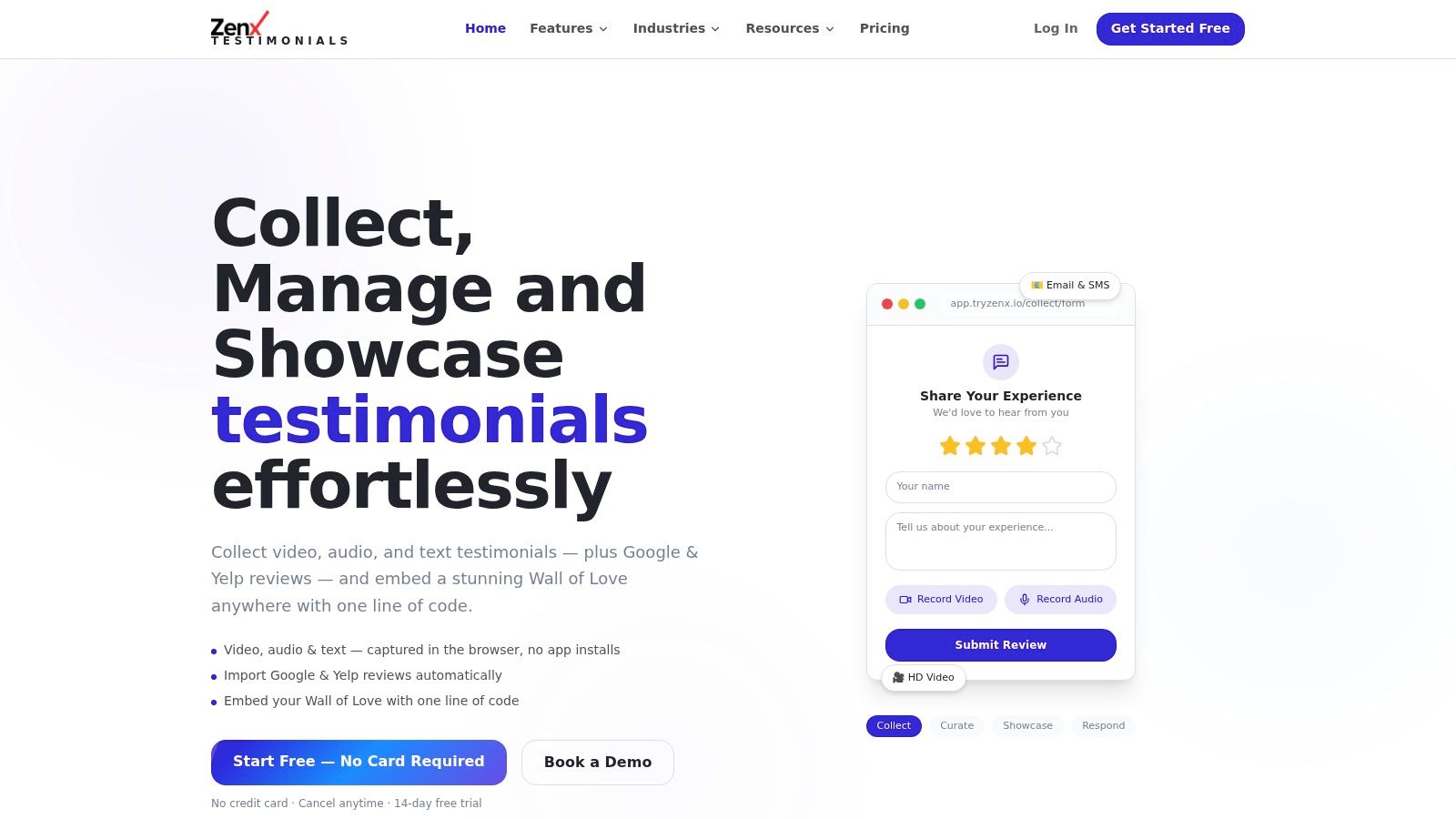
A common 2026 problem looks like this. The team has strong customer proof, but it is split across Google reviews, support emails, founder DMs, and a few customer videos nobody has edited or published. ZenX Testimonials fits that situation well because it handles the whole workflow in one place, from request to published Wall of Love, without forcing marketing to patch together separate collection, storage, and display tools.
Its strongest use case is a video-first testimonial strategy that still needs review aggregation and fast web publishing. Customers can record in the browser without creating an account or downloading an app, which reduces drop-off during capture. ZenX also adds review imports, searchable organization, and hosted customer testimonial pages, so the output is more useful than a folder of clips and quotes.
Where it fits best
ZenX works best for teams that want one operating system for social proof, not just a form and an embed. SaaS companies can collect founder-led video proof for pricing and product pages. Agencies can centralize reviews across multiple clients. Local service brands can pull in Google and Yelp feedback, then turn it into cleaner on-site proof instead of relying only on third-party platforms. E-commerce teams can mix buyer quotes, short videos, and imported reviews into a stronger UGC layer.
That breadth matters in practice. A lot of tools are good at one step. ZenX covers collection, moderation, organization, and publishing well enough that a small team can get a live asset up quickly.
A simple rollout looks like this:
- Send a browser-based video or text request after a successful project, onboarding milestone, or repeat purchase.
- Import existing Google and Yelp reviews so the library starts with real volume.
- Tag submissions by product, service, persona, or use case.
- Pull the strongest proof into a Wall of Love widget, pricing-page section, or service-page testimonial block.
- Reuse approved quotes and clips in sales follow-up, landing pages, and case study drafts.
Why marketers tend to shortlist it
The product is built around speed without giving up control. You can collect HD video, audio, and structured text, then publish through responsive widgets with minimal setup. For a lean marketing team, that means less time chasing assets and more time placing proof where it affects conversion.
The AI features are also practical rather than decorative. Moderation, quote extraction, theme detection, competitor clustering, and case study generation reduce the manual sorting work that usually slows testimonial programs down. If your team already has testimonial volume, that saves real time.
For teams comparing collection-first tools against broader review management platforms, the ZenX vs Testimonial.to comparison is useful because it shows the trade-off clearly. Testimonial.to is often faster for a simple embed setup. ZenX goes further on unified review intake and library management.
Practical rule: If marketing still copies reviews by hand into landing pages, the bottleneck is not demand for testimonials. It is the system.
Trade-offs to watch
ZenX is a strong fit if the goal is to get from scattered customer feedback to a live, organized proof library quickly. The trade-off is that teams looking for simple public pricing may need more clarity during evaluation, especially for larger deployments. Browser-based recording also depends on the customer's device quality and connection, so clip consistency will vary.
Still, if the strategy is broader than "collect a few quotes," ZenX is one of the better options in this list for turning customer voice into a working conversion asset fast.
2. Testimonial.to
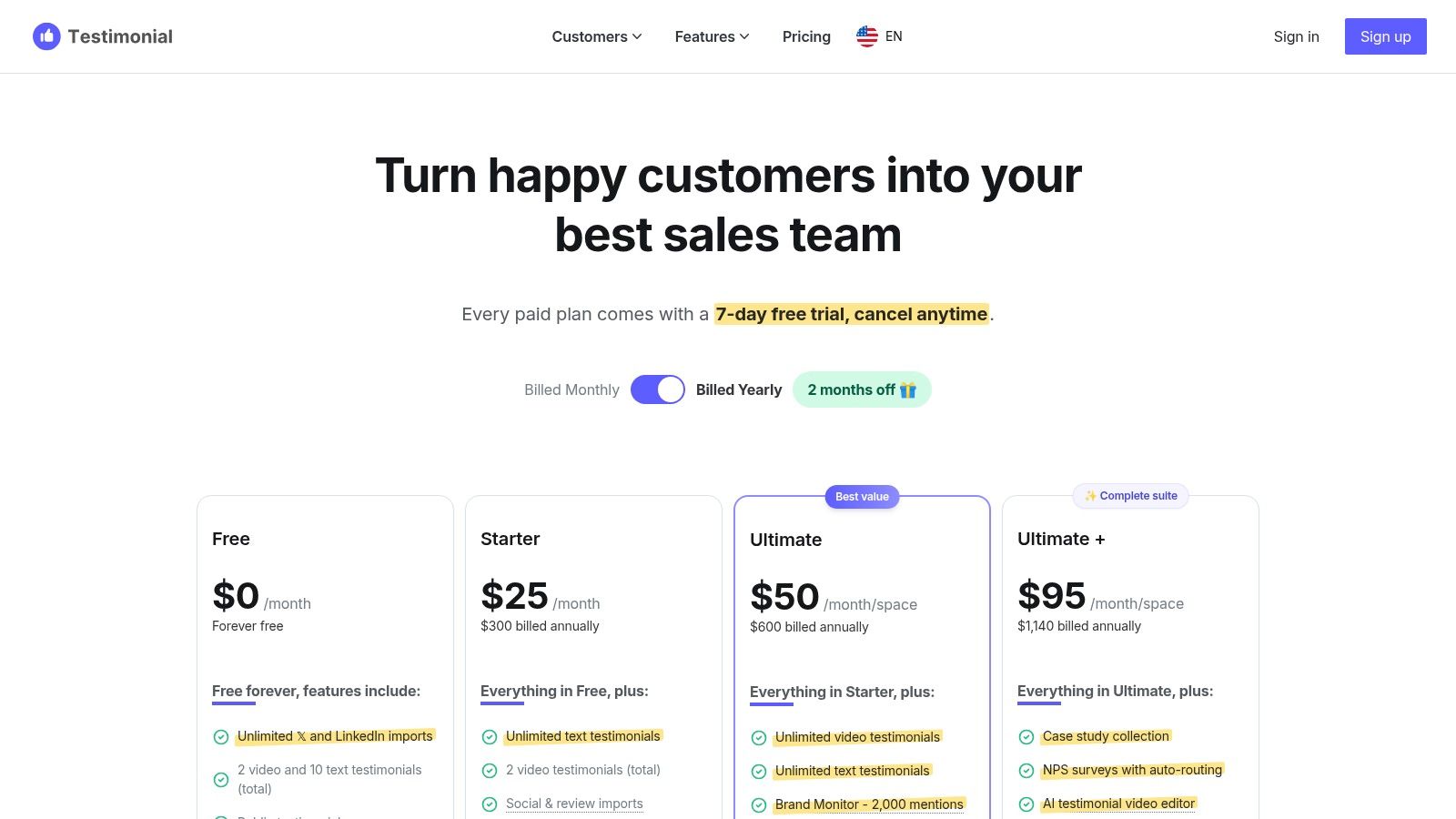
Testimonial.to works well when speed matters more than orchestration. It has a clean product shape: collect video and text testimonials, organize them into spaces, and publish them through no-code embeds and Wall of Love layouts without much setup friction.
For SaaS founders, agencies, and creator-led brands, that's often enough. You can get social proof live on a pricing page fast, and the widgets are mature enough to look finished without custom work.
Where it fits best
This is a practical choice for teams that want a dedicated testimonial layer, not a broader reputation stack. Invite flows, social and review imports, API access, webhooks, and no-code embeds give it enough flexibility for most marketing teams.
Its strongest use case is straightforward website proof deployment. If you need a branded testimonial page, a few embeds, and an easy way to host both text and video, Testimonial.to does that well.
Keep this tool on a short list if your bottleneck is "we need testimonials live this week," not "we need testimonial data flowing through multiple systems."
Trade-offs to watch
The pricing model is where some teams outgrow it. Per-space billing can get awkward for multi-brand portfolios, agencies, or businesses with many product lines. The free tier is useful for testing, but the caps mean serious usage usually moves to paid plans quickly.
A few practical considerations:
- Strong for launch speed: Setup is fast, and the Wall of Love experience is polished.
- Good growth path: Higher tiers add useful controls like analytics, API, and branding removal.
- Less ideal for centralization-heavy teams: If you want review aggregation as a core workflow, you'll likely want a broader platform.
- Multi-space costs can creep: That's the main planning issue for larger organizations.
If your testimonial strategy is video-first SaaS proof with simple publishing, Testimonial.to remains a solid option.
Visit Testimonial.to pricing.
3. Senja
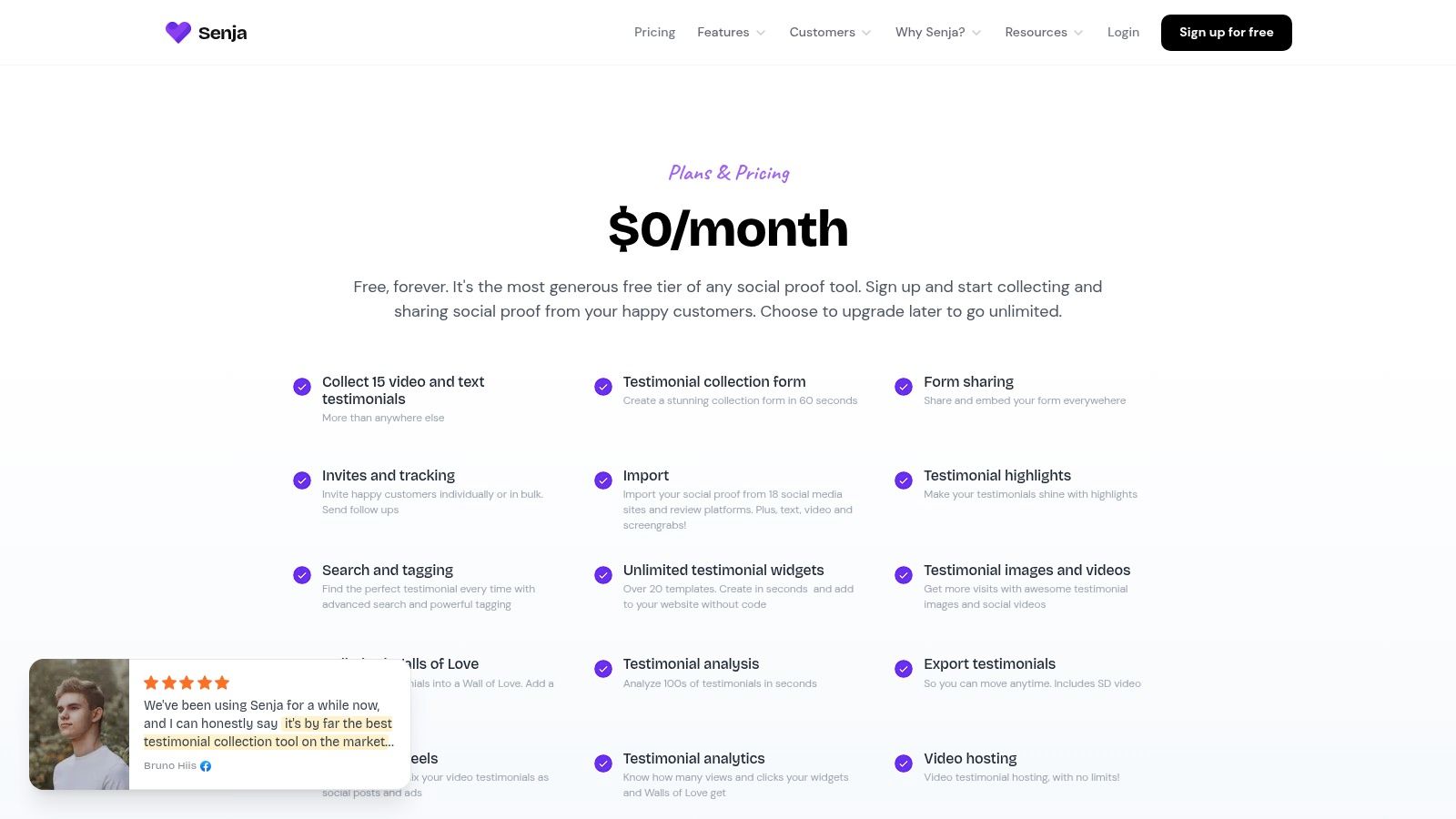
Senja is the easiest recommendation for startups, creators, and small teams that want a lot of surface area before they want process rigor. Its product feels generous. You can move quickly, brand forms and widgets without much effort, and publish across multiple pages without feeling boxed in too early.
That matters if you're still figuring out which testimonials belong where. Senja is forgiving. You can collect text and video, import from many sources, and test different display styles without a heavy setup burden.
Best strategy for Senja
I like Senja most for founder-led marketing and lean growth teams. If you're collecting social proof for landing pages, social posts, sales pages, and lightweight product launches, it gives you breadth without much friction.
Its strongest move is how easy it is to create multiple displays. Unlimited widgets and Walls of Love are useful when one testimonial library needs to support many campaigns.
A practical rollout with Senja looks like this:
- Start with one collection form: Ask for both text and optional video so customers can choose the easy path.
- Import existing praise: Pull in reviews and social proof you've already earned instead of waiting to rebuild from zero.
- Create page-specific walls: Put product-fit testimonials on feature pages, and credibility testimonials on home or pricing pages.
- Use automated follow-ups: Good testimonial systems work best when requests don't depend on manual reminders.
That last point is bigger than many teams realize because automated testimonial collection works best when requests trigger from events like purchases, onboarding completion, support resolution, or renewals instead of manual outreach much later.
Where Senja can feel light
Senja is less suited to teams that need tighter enterprise controls or deeper workflow orchestration. It's a marketing-first product, not a compliance-heavy operating layer.
If your needs are simple, that's a strength. If you're in a regulated or multi-system environment, it can become a ceiling.
Visit Senja pricing.
4. Vocal Video
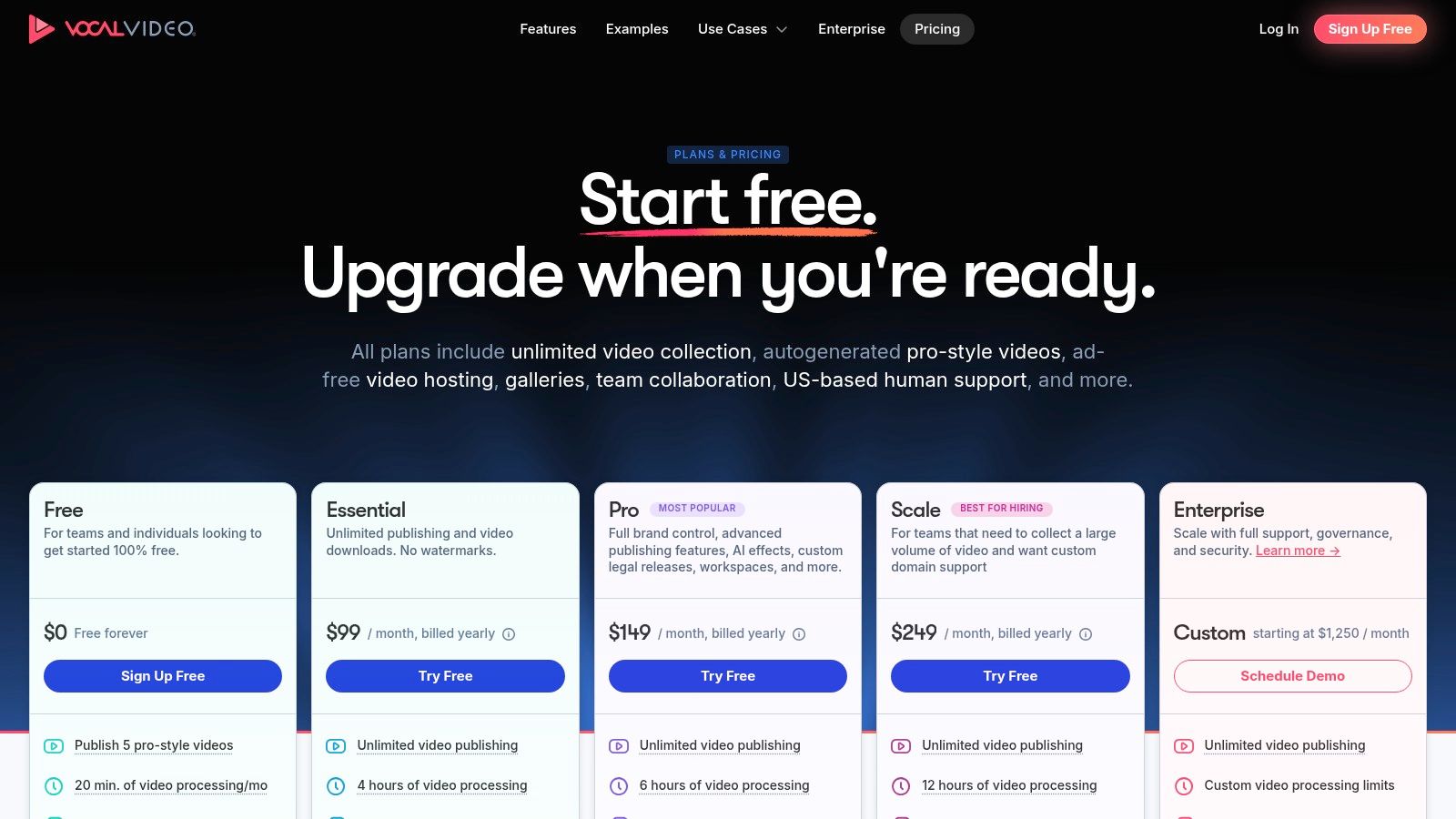
Vocal Video is for teams that care more about production quality than collection breadth. It doesn't try to be the broadest testimonial hub. It tries to make remote customer video look polished enough to publish immediately.
That makes it a strong fit for enterprise marketing, customer advocacy, recruitment content, and global brands that need consistent on-brand output. If rough but authentic clips aren't enough for your use case, Vocal Video earns its place.
Why video teams pick it
The product handles collection and post-processing well. You get branded collectors, automatic editing, subtitles, transcripts, AI summaries, and multiple output formats. For distributed teams, language support is a meaningful advantage because it lowers the friction of using the same workflow across regions.
If video is your primary trust format, it's worth comparing its polish-first approach with a more flexible video testimonial workflow from ZenX, especially if you're balancing authenticity, speed, and lighter-weight publishing needs.
High-production testimonial video works best when the testimonial itself is strong. A polished edit can't fix a weak customer story.
Trade-offs before you commit
Vocal Video is not the best fit if you mainly need a mixed media testimonial library with lots of text proof, imports, and lightweight website widgets. It's a video specialist. That focus is helpful for some teams and limiting for others.
The practical pros and cons are straightforward:
- Best for polished output: Automatic editing and brand controls save internal production time.
- Strong for multilingual use: Subtitles and transcript support help international teams repurpose clips.
- Less flexible for text-heavy proof: It isn't built around a broad text testimonial archive.
- Paid plans matter quickly: Teams with real volume usually need more than entry-level limits.
If your testimonial strategy is "produce clean, on-brand customer video without hiring editors for every asset," Vocal Video is one of the clearest fits on the market.
Visit Vocal Video pricing.
5. Boast
Boast has been around long enough to feel operational rather than trendy. That's useful. It offers video capture, structured forms, moderation, request sequences, and review collection tools in a package that works well for SMBs, agencies, and businesses that need repeatable admin controls.
I usually think of Boast as a volume-and-governance tool. It's not the flashiest platform in this category, but it gives teams enough structure to manage steady testimonial intake without chaos.
Where Boast works best
Boast is a good fit for service businesses, agencies managing clients, and multi-location organizations that want clear request flows and review moderation. Email and SMS collection options help teams meet customers where they're most likely to respond.
Its form builder is also useful when you want more guided submissions, not just open-ended praise. That matters for teams trying to capture specific use cases, objections overcome, or implementation experience.
The real risk in 2026
The bigger issue for review-focused tools now isn't just collection. It's authenticity. That's where many platforms still feel underdeveloped.
One concern the market hasn't fully solved is fake review detection. AgencyBloc notes an underserved gap here, with 25% of third-party reviews in 2024 flagged as fake, a trend expected to accelerate by 2026. Tools can claim AI moderation, but that isn't the same as identity validation, metadata checks, or CRM-based verification.
If a platform helps you publish faster but doesn't help you validate authenticity, you may be scaling risk along with social proof.
Boast remains useful, especially for operational collection and moderation. Just don't confuse moderation with fraud defense. For local service brands and agencies, that distinction matters more every year.
Visit Boast pricing.
6. REVIEWS.io
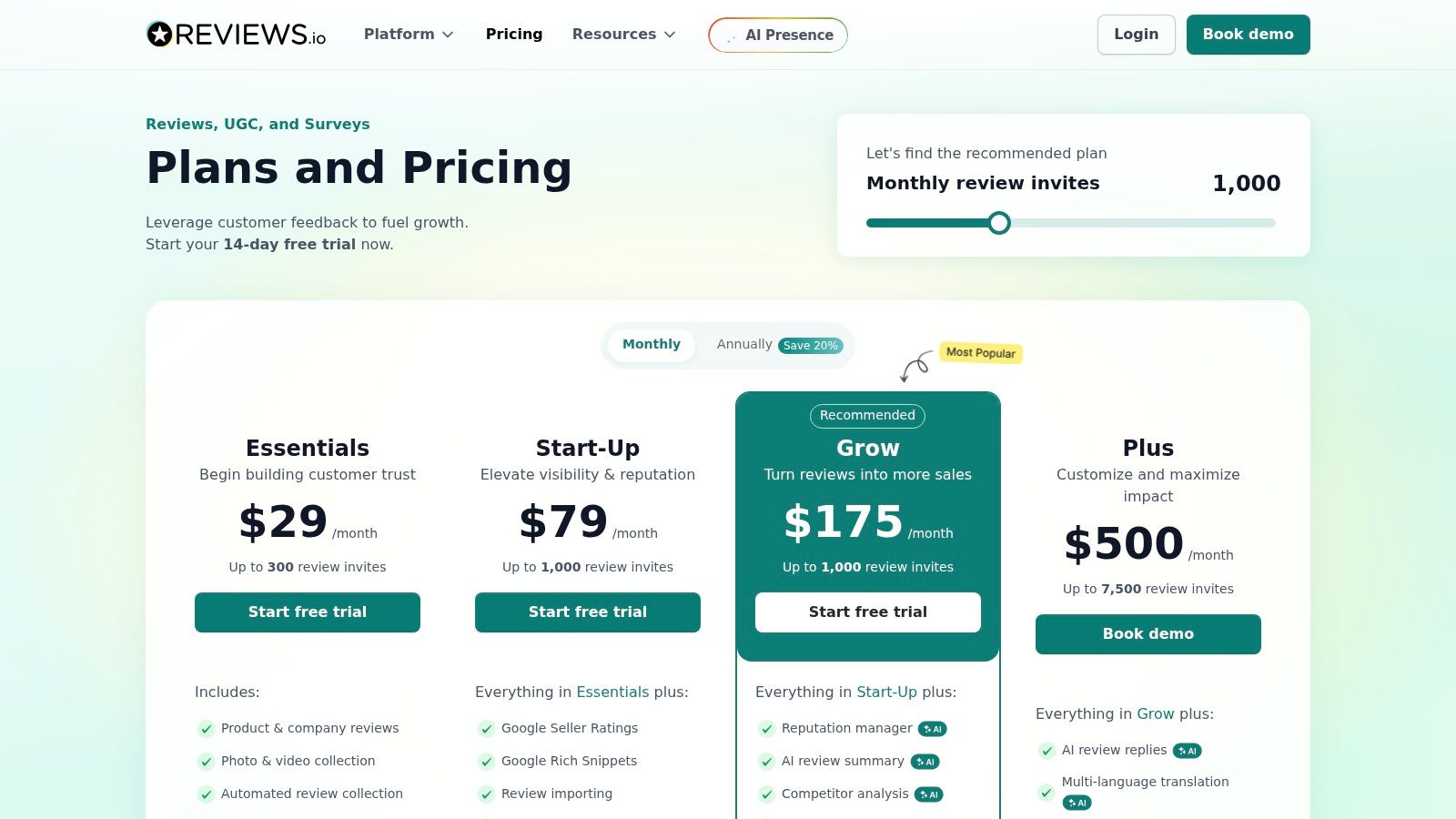
REVIEWS.io makes the most sense when testimonials are only one part of a bigger reviews and UGC machine. E-commerce brands, retail operators, and multi-store businesses often need more than a quote library. They need verified invites, product review flows, media capture, on-site widgets, and Google ecosystem support in one place.
That's where REVIEWS.io feels stronger than simpler testimonial-only tools. It was built for broader review operations.
Best use case
If you run a store, marketplace, or multi-region commerce brand, REVIEWS.io is a practical option because it connects customer feedback to merchandising and trust signals, not just brand storytelling. Product and company reviews can live side by side, while photo and video UGC support richer shopping pages.
I also like it for brands with multiple storefronts or regional sites. Broader integrations and multi-store management give it more room to scale than lightweight Wall of Love apps.
For teams trying to build stronger collection systems, customer feedback workflows from ZenX are worth reviewing alongside REVIEWS.io, especially if you're comparing a broad commerce stack versus a lighter testimonial-first setup.
What to watch
REVIEWS.io can feel heavy if your only goal is a simple testimonial wall on a SaaS site. It has more moving parts, which is great for mature commerce operations and unnecessary for narrower use cases.
A few trade-offs stand out:
- Strong e-commerce fit: Verified review flows and Google alignment matter for retail brands.
- Good for multi-store operations: The platform handles complexity better than simpler testimonial apps.
- More platform than widget: Smaller businesses may not need the full breadth.
- Pricing can take more digging: Invite-tiered structure isn't always as transparent as buyers want.
Choose REVIEWS.io if customer reviews are part of your commerce engine, not just your homepage design.
Visit REVIEWS.io pricing.
7. NiceJob
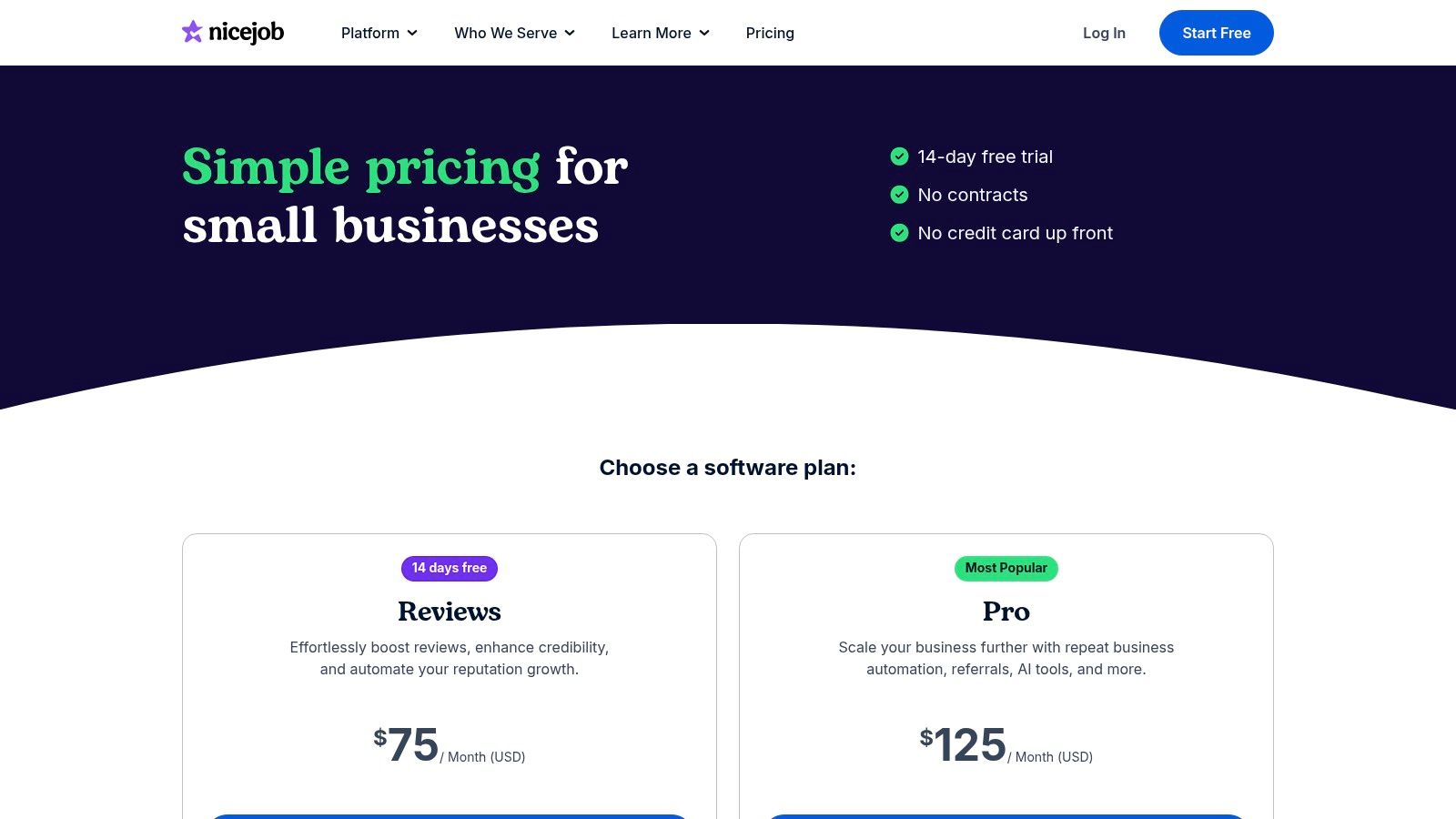
NiceJob is built for local service businesses that care most about reputation growth, review requests, and visible trust signals on their website. Think home services, clinics, law firms, gyms, and similar businesses where public reviews drive lead flow more directly than a polished media library does.
That focus makes the product easier to understand. It isn't trying to be the best storytelling engine for every brand. It's trying to help service businesses ask consistently, monitor reputation, and display proof where prospects are deciding whether to call.
Why local businesses choose it
The biggest advantage is operational simplicity. Automated review requests, follow-ups, widgets, and reputation monitoring sit in one system, and onboarding is geared toward businesses that don't have a dedicated marketing ops team.
Month-to-month pricing clarity also helps. A lot of smaller service businesses don't want a long buying process for review software.
Where NiceJob has limits
NiceJob is less refined than specialist testimonial tools when you want a deep library of curated customer stories. If your team wants extensive tagging, broader media workflows, or more granular asset repurposing, you'll notice the difference.
That trade-off matters even more in CRM-heavy sectors. One overlooked gap in 2026 is the workflow orchestration problem in industries like insurance, where 60% of agencies rely on native AMS tools for review requests and standalone platforms often lack true AMS event integration. NiceJob is strong for local business execution, but regulated teams with strict system dependencies may need more integration depth.
For most local operators, though, the value is clear. NiceJob helps them ask for reviews consistently, showcase them quickly, and keep reputation visible without adding process overhead.
Visit NiceJob pricing.
Top 7 Testimonial Management Tools, 2026 Comparison
| Product | Implementation Complexity 🔄 | Resource Requirements ⚡ | Expected Outcomes 📊 | Ideal Use Cases 💡 | Key Advantages ⭐ |
|---|---|---|---|---|---|
| ZenX Testimonials | Low 🔄, in‑browser recorder & one‑line embed; advanced integrations optional | Low–Moderate ⚡, minimal dev; broadband for HD; AI on paid plans | High 📊⭐, faster capture, publishable assets, improved conversions | SaaS, e‑commerce, agencies, local businesses, course creators | ⭐ Frictionless capture, AI moderation/insights, Google/Yelp import, one‑line embed, real‑time onboarding |
| Testimonial (testimonial.to) | Low 🔄, no‑code widgets and single‑video embeds | Low–Moderate ⚡, scales with invites, API/webhooks on higher tiers | Moderate–High 📊, improved social proof and convertibility | SaaS, agencies, creators wanting quick setup | ⭐ Fast setup, strong widgets, invite workflows, integrations (Zapier/API) |
| Senja | Low 🔄, quick branding, unlimited widgets/Walls | Very Low ⚡, generous free tier; Pro for advanced features | Moderate 📊, rapid collection and site display for small teams | Startups, creators, small teams with tight budgets | ⭐ Most generous free plan, unlimited walls, flat transparent pricing |
| Vocal Video | Medium 🔄, video‑first collectors plus auto‑editing workflows | High ⚡, processing power, paid tiers for full exports and branding removal | High 📊⭐, production‑quality video assets with multilingual support | Teams needing polished video testimonials at scale | ⭐ Auto editing, multilingual transcripts/subtitles, pro templates and outputs |
| Boast | Medium 🔄, form builder, automated sequences, admin & moderation controls | Moderate ⚡, response‑based metering; tiered video/length limits | Moderate–High 📊, scalable testimonial management with admin oversight | SMBs, agencies, multi‑location businesses | ⭐ Clear plan caps, strong admin controls, automated request sequences |
| REVIEWS.io | Medium–High 🔄, multi‑store, syndication and ecommerce integrations | High ⚡, syndication, API work, multi‑region operations | High 📊⭐, comprehensive reviews + UGC with Google ecosystem benefits | Ecommerce and multi‑store/multi‑region brands | ⭐ Deep ecommerce integrations, Google Seller Ratings, syndication and multi‑store support |
| NiceJob | Low 🔄, purpose‑built review automation for local services | Low–Moderate ⚡, clear monthly pricing; Sites add‑on increases cost | Moderate 📊, steady review growth and consolidated reputation | Local service SMBs wanting automated review growth | ⭐ Clear month‑to‑month pricing, strong onboarding, review automation and widgets |
How to Choose Your Testimonial Tool for 2026
A common failure point shows up after the tool is already bought. The team collects a few strong quotes, records two customer videos, then everything stalls in a dashboard because no one can turn it into a usable Wall of Love fast enough.
The right choice depends less on feature count and more on the testimonial strategy you need to run. A video-first brand usually needs guided recording and editing help. A local service business needs steady review capture and reputation follow-up. An e-commerce team often needs review collection, UGC reuse, and syndication across product pages and ads. Different jobs. Different tools.
Start with the workflow you need to ship in the next 30 days. If the goal is polished customer video, Vocal Video fits that production-heavy approach well. If the goal is fast collection and flexible publishing for a lean team, Senja is easier to put in place. If reviews are tied to product merchandising and store integrations, REVIEWS.io makes more sense. If reputation growth is the priority for a service business, NiceJob matches that operating model better.
Then test for operational friction. Can a customer respond in one sitting on mobile? Can marketing approve, tag, and publish proof without asking a developer for help? Can sales reuse the same testimonial library in decks, landing pages, and follow-up emails? Those are the details that decide whether a platform becomes part of the workflow or just another place where assets get buried.
A few rules hold up across categories:
- Pick the tool that matches the primary proof format. Video, text reviews, and e-commerce UGC each need a different collection flow.
- Prioritize publishing speed. If updating a Wall of Love takes days, proof loses momentum.
- Keep the library searchable. Tags, filters, and approvals matter once you have more than a handful of testimonials.
- Check moderation and verification controls. Strong proof still needs context, permissions, and quality control.
- Buy for the next use case. The tool should handle today's collection job and tomorrow's distribution needs.
If you want one system that combines testimonial capture, review aggregation, and fast publishing into a live Wall of Love, ZenX Testimonials is a practical short list option.
If your team is still managing proof across inboxes, spreadsheets, and scattered review sites, ZenX Testimonials gives you a cleaner starting point. It supports video, audio, and text collection, keeps everything in one library, and helps you get a conversion-focused Wall of Love live without adding a complicated process.
Written by
Sunil
ZenX Testimonials
Sunil writes about reviews, testimonials, and the everyday work of earning customer trust.